Speaker Series
Friday, April 10, 2026
Lecture:
7 - 8:30 PM PST
Main Gallery
Free to Members [show digital card], $10 General Public
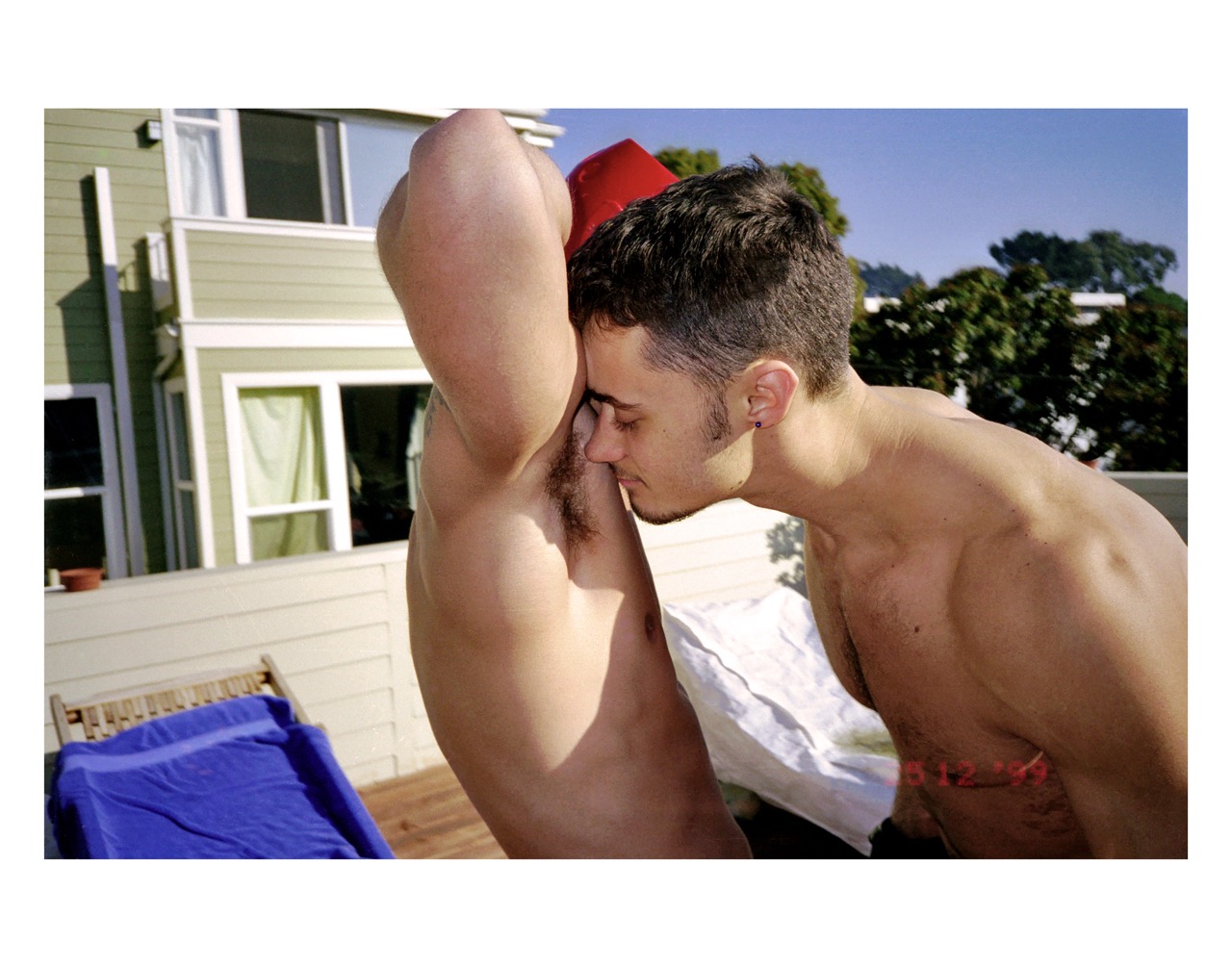
JOIN US for a special evening with Slava Mogutin, who speaks on his analog photography as an intimate, diaristic form of witness, documenting queer lives and relationships with closeness and care as an act of visibility shaped by exile, resistance, and lived experience.
Slava Mogutin is an artist, writer, and photographer whose work occupies the intersection of autobiography, documentary practice, and political witness. Born in Russia and forced into exile in the mid-1990s after repeated persecution for his writing and queer activism, Mogutin arrived in the United States carrying both a personal history of displacement and a deep skepticism toward official narratives. Photography became, for him, not simply a medium of expression but a tool of record-keeping—an analog method for asserting lived truth against erasure.
Mogutin’s photographic practice is rooted in intimacy. Working primarily with analog cameras, he photographs friends, lovers, artists, activists, and strangers encountered through shared subcultures and private networks. These images resist spectacle and polish. Instead, they emphasize proximity, trust, and duration—the sense that the camera is present because a relationship exists, not because a performance is being staged. Bodies appear unguarded, often vulnerable, but never anonymous. Each figure is rendered as a subject rather than an object, participating in the act of being seen.
Across his work, the human body functions as both evidence and archive. Mogutin photographs scars, gestures, tattoos, fatigue, tenderness, and desire with equal seriousness, collapsing the distance between portraiture and confession. Sexuality is present but never isolated as provocation; it is integrated into the broader facts of daily existence. In this way, his photographs quietly challenge dominant visual traditions that separate eroticism from documentation, or queerness from ordinary life. What emerges is a visual language of presence—direct, unsentimental, and insistently human.
Mogutin’s background as a writer informs the structure of his images. Like fragments of a diary or field notes from an ongoing study, the photographs accumulate meaning through sequence rather than singular emphasis. No single image claims to summarize a life or a community. Instead, meaning unfolds through repetition, variation, and return: the same bodies reappearing over time, the same rooms seen under different conditions, the same faces marked by change. This longitudinal quality places his work in conversation with documentary traditions while rejecting their claims to neutrality.
Politically, Mogutin’s photography is inseparable from his experience of censorship, exile, and resistance. Having lived under systems where representation itself could be criminalized, he treats visibility as a hard-won condition rather than a given. The decision to photograph—and to preserve those photographs—becomes an act of defiance against disappearance. Yet the work never announces itself as propaganda. Its force lies in its refusal to simplify, dramatize, or explain. The images insist on complexity because the lives they document are complex.
In the context of this exhibition, Mogutin’s photographs can be understood as a sustained inquiry into how lives are lived, recorded, and remembered outside institutional frameworks. They are not illustrative images but human documents: records made in real time, under real conditions, by someone fully implicated in what he photographs. Together, they form an archive of presence—one that affirms photography’s capacity to bear witness not through distance or authority, but through closeness, accountability, and care.
Watch the Event
SLAVA MOGUTIN: Now Is a Good Time to Get Naked
Recorded Friday, April 10, 2026
Hunter O'Hanian
Art Historian